Blue Oyster Mushroom
Pleurotus ostreatus var. columbinus
Also known as: Blue oyster, Cold blue oyster, Warm blue oyster, Pleurotus columbinus
Quick Reference
- Difficulty
- Beginner (1/5)
- Days to harvest
- 4–7 days
- Yield per 5lb block
- 1.5–2.5 lbs per 5 lb block across 2–3 flushes
- Fruiting temp
- Cold 35–50°F · Warm 50–80°F
- Humidity
- 85–95%
- Use
- Culinary
- Best substrates
- Wheat straw, Master's Mix (hardwood + soy hull pellets), Supplemented hardwood sawdust, Coffee grounds
- Growing methods
- kit · bag · bucket · log · outdoor-bed
Contents
- Why grow blue oyster mushrooms
- What makes blue oyster mushrooms different
- How to grow blue oyster mushrooms
- Blue oyster fruiting conditions
- Harvesting blue oyster mushrooms
- Blue oyster flavor and culinary uses
- Common blue oyster growing problems
- How to get started growing blue oysters
- Is blue oyster the same as other oysters?
- Related guides
Why grow blue oyster mushrooms#
Blue oyster is the oyster we start beginners on, and the one most growers keep coming back to. It colonizes fast, shrugs off the temperature swings of an ordinary home, fruits on almost any cellulose substrate, and rewards you with dense cobalt-grey clusters about three weeks after you open a kit. On our difficulty scale this is a 1 — perfect for beginners. If your first grow is going to succeed, this is the one to pick.
What sets it apart from the other oysters is the color and the cold. The deep blue cap is the draw, and unlike the warm-loving pink and golden oysters, blue tolerates cool rooms well and even comes in a cold-adapted strain that fruits through winter outdoors. That makes it the natural choice for an unheated basement, a garage, or a shaded yard in the colder half of the year.
Blue oyster does come with one thing to watch. It’s sold as two different strains under a single name, and they want very different fruiting temperatures, so buying the wrong one for your space can mean a block that colonizes beautifully but never pins. Telling them apart happens at the checkout page, and we cover it below.
What makes blue oyster mushrooms different#
Most oyster cultivation is generic across the genus, so the substrate, spawn, and method instructions on our main oyster guide apply to blue without changes. Three things genuinely set it apart.
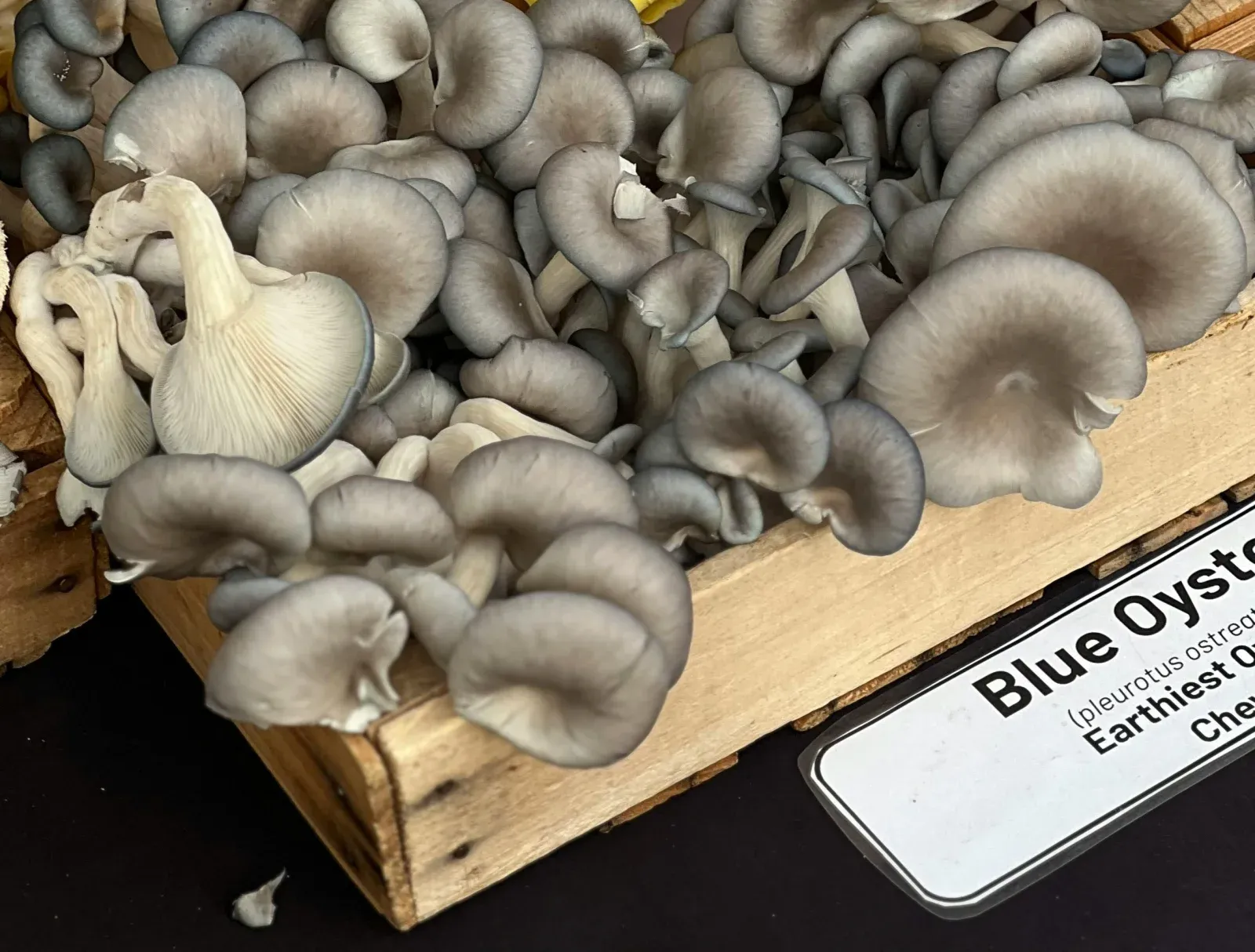
The cobalt color is temperature-driven, not a dye or a special pigment. The blue comes from the natural balance of melanin in the cap. A 2023 study of Pleurotus cap color traced the shade to the relative ratios of true and brown melanin, which shift with growing conditions. Cooler fruiting temperatures and good light push the color toward deep cobalt; warmth and dim light wash it out toward pale steel-grey, sometimes almost white. There is no “cobalt pigment” to buy or add. The color is a phenotype you coax out with cold and light.
It comes in a warm strain and a cold strain. This is the most important thing to know before buying. Ohio State’s mycology program describes both: a cold blue that fruits at roughly 35–50°F, and a warm blue that fruits across a wide 50–80°F band and tolerates brief spikes into the 90s. Cold blue is a true cold-loving fruiter that usually needs a cold shock to trigger; warm blue is the standard indoor strain. They look identical, so the difference lives in the supplier’s strain label, not in anything you can see.
It’s the cold-climate oyster. Both strains colonize at normal room temperature, but on the fruiting side blue stretches into temperatures that stall pink and golden completely. The cold strain in particular makes blue the oyster for winter and outdoor log grows, where its pigment also runs deepest.
How to grow blue oyster mushrooms#
Blue grows by every standard oyster method: a pre-colonized kit, bucket tek, sterilized bag culture on Master’s Mix, and outdoor logs or beds. The mechanics are identical to the rest of the genus, so rather than repeat them here, the full step-by-step for each method lives on the main oyster guide, along with the substrate options and the equipment you’ll need.
Two blue-specific notes layer on top of those shared instructions:
- Match the strain to your method and season. A warm blue strain suits a heated indoor room year-round. A cold blue strain suits an unheated space, a winter grow, or outdoor logs, and it’s the better pick if deep color matters to you.
- Skip the monotub. Like all oysters, blue needs far more fresh air than a sealed tub provides, and will throw leggy, malformed clusters in one. Use a kit, bucket, bag, or open fruiting chamber instead.
From a kit, expect first pins about a week after opening and harvest 14–21 days in. Bag and bucket grows colonize in roughly two to three weeks before you move them to fruiting conditions.
Blue oyster fruiting conditions#
Colonization is the easy part, and it’s the same for both strains: keep the substrate around 68–77°F in the dark. Ohio State lists 70–75°F as the sweet spot, and the mycelium runs fast and aggressively, which is part of why blue resists contamination so well.
Fruiting is where the strain you bought matters.
Temperature. Cold blue fruits at roughly 35–50°F and usually needs a cold shock to start. Warm blue fruits across about 50–80°F and tolerates brief spikes toward the 90s. If you don’t know which strain you have, treat 55–70°F as the safe overlap where almost any blue will pin.
Cold shock for color and pinning. Dropping a fully colonized block into a refrigerator for about 48 hours before introducing fresh air helps trigger fruiting and deepens the blue. This matters most for the cold strain and for anyone chasing the richest color. It’s a temperature effect on the pigment, not a chemical additive.
Humidity, air, and light. Hold humidity around 85–95% through pinning and fruiting. Blue needs heavy fresh air exchange; Cornell’s commercial cultivation guide puts the ceiling for oysters at about 800 ppm of CO₂, above which stems run long and caps stay small. Give the developing pins indirect light or a low LED on a daily cycle, both to form normal caps and to bring out the blue. Full darkness produces pale, deformed clusters.
Harvesting blue oyster mushrooms#
Harvest blue oysters just before the caps flatten, while the edges are still slightly curled. The technique, flush timing, and the spore-load precautions that matter for any oyster are covered in full on the main oyster guide. Twist off the whole cluster at the base, then soak and rest the block to push a second flush. Expect 1.5–2.5 lbs across two or three flushes from a 5 lb block.
One detail is specific to blue: the cobalt color is at its best on the living mushroom and right at harvest. It fades toward grey as caps mature, and it cooks and dries out entirely, so if the color is the point, harvest a touch early and serve fresh.
Blue oyster flavor and culinary uses#
Blue and pearl oysters share a mild, savory flavor with a faint anise scent when raw. That anise note cooks off, leaving a meaty, tender texture that holds its shape in stir-fries, soups, and pasta. Browned hard in butter or oil, well-cooked blue oysters take on a seafood-like, umami quality that many growers compare to scallops or oyster meat.
They keep about five to seven days fresh in a paper bag in the fridge, dry well for long storage, and rehydrate in fifteen minutes for soups and risottos. Freezing them raw turns them to mush, so sauté lightly before freezing if you need to store a large flush.
Common blue oyster growing problems#
Most oyster problems are shared across the genus: leggy stems from poor fresh air exchange, aborted pins, and wet “schlog” substrate. Those are covered on the main oyster guide. Two issues are specific to blue.
Pale or grey caps instead of blue#
The grow is fine; the color isn’t a health signal. Pale caps mean the mushrooms fruited too warm, with too little light, or both. Move into the cooler end of your strain’s range, add indirect light or a low LED, and cold-shock the next block before fruiting. The pigment follows temperature and light, not nutrition.
A strain that won’t pin in your space#
If a blue block colonizes well but refuses to fruit, you likely have a strain mismatched to your temperature — our guide on why mushrooms won’t pin covers the other triggers too. A warm strain sitting in a 45°F garage, or a cold strain in a warm room, will stall. Check the strain you bought against your conditions and move the block to a temperature inside that strain’s fruiting range.
How to get started growing blue oysters#
The easiest way in is a pre-colonized kit. No substrate prep, no sterile work, just cut the bag, mist, and wait. North Spore’s blue oyster Spray & Grow kit on Amazon fruits on a kitchen counter in about three weeks, and Midwest Grow Kits offers blue in kit form if you’d rather compare options.
Affiliate link — we may earn a commission, at no extra cost to you.
Once you’re past kits, blue is the most widely stocked gourmet oyster as spawn, sold as grain, sawdust, and plug spawn for logs. North Spore carries it in both grain and sawdust spawn, Out-Grow stocks the columbinus blue strain as grain spawn and liquid culture at good prices, and Fungi Ally discloses named strains on its spawn, which is genuinely useful here since it’s the easiest way to confirm whether you’re buying a warm or cold blue before you order. For log inoculation, Field & Forest Products sells blue oyster plug spawn.
If you specifically want high-yield blue genetics, Mossy Creek Mushrooms is well regarded among commercial growers for its “King Blue” strain. They aren’t in our directory yet but are on our shortlist to add.
Is blue oyster the same as other oysters?#
Blue vs. pearl oyster. Same species, and essentially the same grow. Pearl oysters are the standard grey-brown Pleurotus ostreatus; blue is the blue-pigmented form. If a recipe or guide calls for pearl, blue works identically.
Blue vs. king oyster. A different mushroom entirely. King oyster is Pleurotus eryngii, with a thick edible stem, a small cap, and its own cultivation profile. The shared “oyster” name is the only connection.
Is the blue color natural? Yes. It’s the mushroom’s own melanin, not a dye, and it’s strongest in young caps grown cool. It fades with maturity and warmth, which is why store-bought or warm-grown blue oysters often look more grey than blue.
A note on the name: “blue oyster” is the blue color form of Pleurotus ostreatus, historically catalogued as the variety columbinus. Modern taxonomic databases generally fold that name back into P. ostreatus rather than treating it as a separate variety, so you’ll see it written both ways. For growing purposes, it’s an ostreatus through and through.
Related guides#
- Oyster Mushrooms — Complete Growing Guide — shared substrate, methods, harvest, and spore-safety details for the whole oyster family
- How to Grow Mushrooms at Home — Beginner Guide
- Substrate Calculator — pre-fills for Master’s Mix or pasteurized straw
- Pressure Cooker Buying Guide — sterilization for bag culture
- Lion’s Mane Growing Guide — a good second species once you’ve run a blue oyster grow
- Enoki Growing Guide — a cool-fruiting species that suits the same unheated spaces as cold-strain blue
Newsletter
Grow better mushrooms